

Knowledge, attitude and a willingness to get involved – all these things are part of democratic education.
With your consent, we store data on your device to analyze your usage behavior and seamlessly integrate external content for you. You can revoke your consent or make specific settings at any time.


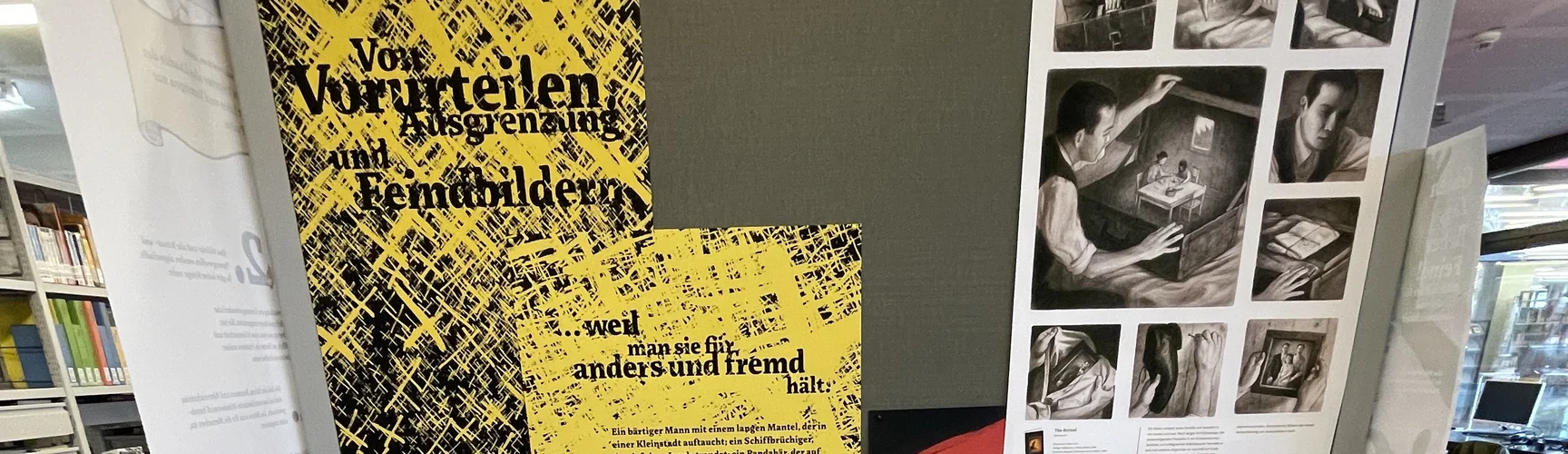
A democratic society offers people a vast array of far-reaching and diverse opportunities. At the same time, however, it also presents people with challenges and calls on them to get involved. Against this backdrop, key educational objectives – such as the ability to exercise nuanced judgement and take action in pluralistic contexts, and the continuous development of participatory skills – come to the fore.
Our ‘Education in a Democratic Society’ programme explores this complex framework. It brings together and initiates projects that address the current challenges facing democratic society from an interdisciplinary perspective and examine the potential of education and upbringing to foster participation, tolerance and solidarity. The programme thus serves as a communication platform and hub.
Our Master’s programme “Migration, Education and Democracy” also provides students with an in-depth academic education in this interdisciplinary field.
Key themes and areas of research include values, the concept of humanity, life orientation in a pluralistic society, life planning skills, the ability to engage in discourse, ways of facilitating political and cultural participation, democracy education and approaches to political enlightenment, educational equity, equal opportunities, integration and inclusion, the prevention of anti-Semitism, and practical approaches to addressing ‘alternative facts’, fake news and populism.
Furthermore, the programme responds through research, development and consultancy to the need for development and transformation within educational and cultural institutions, which has become all the more apparent as a result of the pandemic.
Knowledge, attitude and a willingness to get involved – all these things are part of democratic education.

Democracy education is the responsibility of everyone involved in schools. In research and teaching, the subject must be taken seriously, approached from an interdisciplinary perspective and firmly embedded within the institution on a long-term basis.
Organisation
Karlsruhe University of Education
Building
2
Room
B210
Phone
Availability
Consultation hours: Wednesdays from 11.45 am to 1.15 pm
and by arrangement
Organisation
Karlsruhe University of Education
Building
2
Room
B226
Phone
Availability
By arrangement
Organisation
Karlsruhe University of Education
Building
2
Room
B212
Phone
Availability
Consultation hours:
Wednesday 12.00–13.00
Updated on 28 October 2026 by Central Web Editorial Office